
ETA SPOT
ETA Inc.Maps & Navigation
3.3610.00 Reviews
- Version
- 1.17
- Installs
- 100.00K
- Age Rating
- Everyone
Screenshots

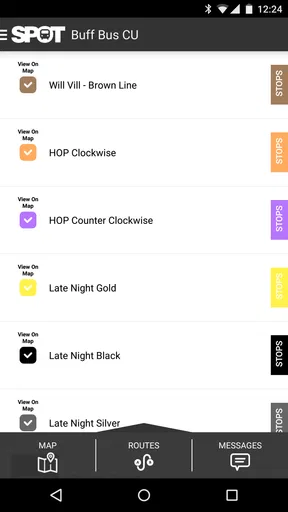
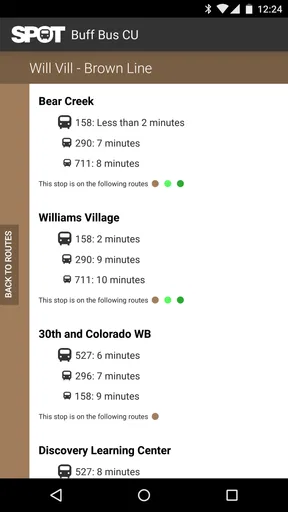
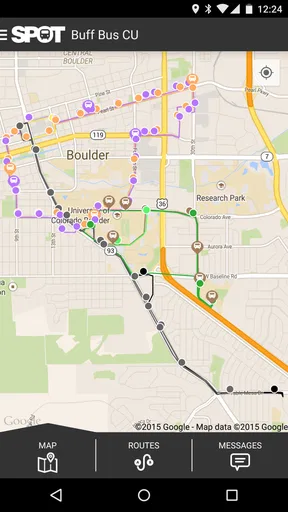
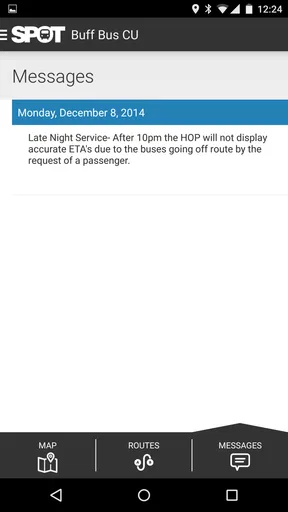
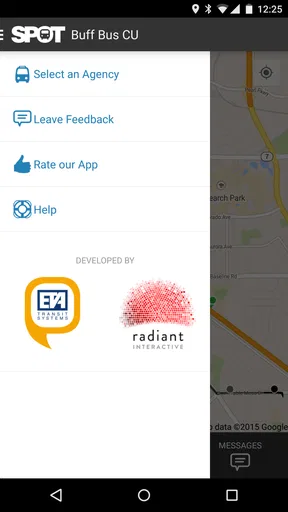
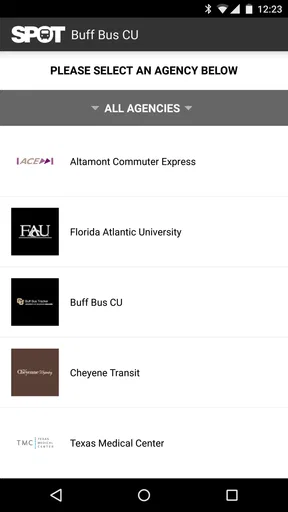
Our Review of ETA SPOT
 Analysis by Appyee
When I test a navigation app, I care less about how impressive the map looks and more about whether it helps me make a decision before I leave. ETA SPOT is built around that practical question: when will I actually arrive, and which transit route makes the most sense? Developed by ETA Inc., this free app sits in the Maps & Navigation category and focuses on arrival predictions and route planning for people who use public transportation.
That narrow focus is both its appeal and its limitation. I would not treat it as a complete replacement for a general map app, especially when I need walking directions, driving navigation, cycling routes, or a broad local search. I see it instead as a transit-oriented tool that can be useful when the main problem is estimating arrival time and comparing ways to get across a city.
The app has an average rating of 3.3 from around 1.2 thousand ratings, with more than 600 written reviews and over 100 thousand installs. Those figures suggest a modest but real user base rather than a universally dominant navigation service. It is free, rated for Everyone, and currently listed at version 1.17 for devices running Android 5.0 or later.
What using ETA SPOT feels like in everyday travel
The most realistic way to understand this app is to picture a normal appointment. I might be leaving work to meet a friend, know roughly where I need to go, and want to avoid guessing whether a bus, train, or combination of transit options will get me there on time. Instead of browsing several possibilities manually, I can use the app’s central purpose—route planning and arrival prediction—to turn that uncertainty into a more useful estimate.
That is especially helpful when I am deciding whether to leave immediately or wait for another service. A route that looks shorter on a map is not always the route that gets me there first. A transfer, a long walk between stops, or a service with a less convenient departure can change the practical answer. An app dedicated to transit timing encourages me to compare the journey as a complete trip rather than judging it by distance alone.
I also find the idea of a dedicated transit tool more comfortable for repeat journeys. If I regularly travel between home, work, school, or a familiar station, I do not necessarily need a large platform filled with restaurant listings, road traffic, reviews, and unrelated recommendations. A focused interface can reduce the amount of information I have to process when I am already standing at a stop and trying to make a quick choice.
Still, I would approach every predicted arrival as an estimate, not a promise. Public transportation is affected by delays, missed connections, traffic, service changes, and conditions outside the app’s control. The useful habit is to treat the prediction as one input in my decision, then leave a little practical margin when the appointment matters.
Where the focused design helps
ETA SPOT makes the most sense for someone whose regular travel depends on transit and who wants a quick answer about arrival time. Students, commuters, visitors staying in a city without a car, and occasional riders who dislike working through complicated route choices are the clearest audience. The app’s purpose is easy to understand: plan a transit journey and get a better idea of when it may finish.
I would also consider it when I already know the broad direction of a trip but need help choosing between alternatives. For example, if two stations can take me toward the same destination, the more useful question is not simply which one is closer. I want to know which complete route is likely to be more efficient, including the transit portion and the time spent changing services.
A less obvious benefit is that arrival predictions can improve how I communicate with other people. If I am meeting someone, I can make a more informed decision about whether to leave now, wait for a better connection, or tell them that I may arrive later than planned. That does not require the app to replace every other navigation function; it only needs to make the timing question easier to answer.
On the other hand, I would skip it if my trips are mainly by car, bicycle, or on foot. I would also look elsewhere if I need a broad discovery tool for businesses, detailed turn-by-turn walking guidance, or a single app that handles every mode equally. Its value depends on whether transit timing is the problem I am actually trying to solve.
Trust starts with knowing what the app is for
My trust in a navigation app begins with a clear boundary around its job. ETA SPOT presents itself as a transit planning and arrival-prediction app, not as an all-purpose travel platform. That clarity matters because it lets me judge the product against a specific expectation rather than assuming it will provide every feature found in a much larger mapping service.
The developer is ETA Inc., and the app has been available since February 16, 2015. Its long presence does not automatically prove that every experience will be smooth, but it gives the product a history that is easier to evaluate than a brand-new tool with no established usage. The current version is 1.17, so I would pay attention to how well it behaves on my particular device and operating system rather than assuming that an older phone will offer exactly the same experience as a newer one.
I also like that the basic price is free. That removes an important barrier when I am deciding whether to test a specialized transit app alongside the navigation tools I already use. Free access does not by itself tell me how the app handles information or what choices appear during setup, so I would still read any permission prompts and notices carefully. The sensible approach is to judge the app by the controls it visibly offers, not by assumptions about what a navigation app must do behind the scenes.
Permissions, data choices, and moments that deserve attention
Location is the obvious sensitive moment in any navigation experience. Before allowing access, I would ask myself whether I need the app to know where I am for the current trip or whether I can enter a starting point manually. If the interface gives me a choice between active location use and typed locations, the manual option may be preferable when I am planning tomorrow’s journey from home.
I would also review each permission request when it appears instead of approving everything automatically. A transit planner needs enough information to calculate a route, but I should still understand what I am allowing at the moment the request is shown. If a permission is optional, declining it may be a reasonable trade-off. If it is essential to a feature I want, I can make that decision consciously rather than treating access as an invisible condition.
Another data-sensitive moment comes when I plan a trip to a place that reveals something personal, such as a workplace, clinic, school, or someone’s home. I would avoid leaving sensitive destinations visible on a shared device and would be careful when planning in public. This is not a criticism unique to ETA SPOT; it is a good habit for any location-based app. The important point is that route searches can expose more about my routine than I may notice at first.
Account controls deserve the same attention. If the app offers sign-in, I would look at what is optional and what is required before creating an account. I prefer to use a navigation tool without sharing more information than the trip requires, whenever the app allows that. I would also check for visible settings related to saved places, history, notifications, and location access, because those controls determine how much agency I have after the first launch.
I cannot treat a prediction as evidence that the app has perfect or live knowledge of every disruption. Even when an arrival estimate looks precise, transit conditions can change after the calculation. My practical rule is to refresh the journey before an important departure and compare the result with information displayed at the station or stop when available. That small extra check is worthwhile for flights, exams, interviews, and other appointments where a missed connection has a high cost.
Small habits that make the app more useful
My first tip is to plan the full journey before walking to the stop. It is tempting to focus only on the next departure, but the best-looking first leg may lead to an awkward transfer later. I would compare the complete route and pay attention to how much flexibility I have if one connection is missed. A slightly less aggressive route can be the better choice when the arrival time is close but the transfer is easier.
My second tip is to use the app for decisions, not just confirmation. If I already have a favorite route, I might open the planner only to reassure myself that it still works. A better workflow is to check at least one alternative when the schedule is tight. That can reveal a route that is less familiar but gives me a useful backup if the preferred service becomes inconvenient.
Third, I would separate routine planning from urgent travel. For a normal commute, I can compare options calmly and learn which connections fit my schedule. For an urgent trip, I would avoid relying on a single predicted time. I would check the route shortly before leaving, keep an alternative in mind, and allow extra time for walking or transfers. The app can support that process, but it cannot remove the uncertainty built into public transportation.
A fourth useful habit is to test the app on a familiar journey before depending on it in an unfamiliar place. I can compare its suggested route with what I already know about my local network. If the result is easy to understand and matches my experience, I gain confidence in how to read its estimates. If the route feels confusing or impractical, I learn that before I am standing in an unknown station with a deadline.
These habits also expose the central trade-off. ETA SPOT can reduce the mental work of planning, but it does not eliminate the need for judgment. I still need to understand where I am going, recognize a transfer, notice a service announcement, and decide how much delay I can tolerate. That is a strength for users who want assistance without surrendering every decision, but it may feel insufficient for someone seeking fully guided navigation.
How it compares with larger navigation alternatives
A general mapping app usually offers a wider package: multiple travel modes, walking instructions, driving directions, place search, traffic context, and sometimes richer local information. If I am exploring an unfamiliar neighborhood and need to find a café after getting off a train, a broad map is probably more convenient. It keeps the entire outing in one place.
ETA SPOT’s advantage is concentration. A larger app may present many layers of information that are useful in some situations but distracting in others. When my only question is how to use transit and when I might arrive, a specialized tool can feel more direct. Its narrower purpose may also make it easier to build a personal routine around checking departures and comparing routes.
The trade-off is that I may need another app for the parts around the transit journey. I might use a general map to walk to the station, ETA SPOT to think through the transit route, and a station display or operator notice to verify current conditions. That combination is less convenient than a single all-purpose application, but it can be more realistic than expecting one source to be perfect at every stage.
I would choose ETA SPOT over a general alternative when transit timing is the main issue and I value a focused experience. I would choose the broader option when the journey includes several modes, detailed pedestrian guidance, or location discovery. Neither choice is universally better; the right one depends on whether I want a specialist for arrival planning or a complete travel companion.
Who should install it, and who should be cautious?
I think the strongest match is a transit rider who wants a free way to plan journeys and think about arrival time without committing to a paid tool. It is also worth trying for someone who has recently moved to a city and is learning how different routes connect. The Everyone content rating makes it broadly approachable, while the Android requirement of version 5.0 or later means many older compatible devices can at least meet the stated system requirement.
I would be more cautious if my phone is old, my travel depends on complex transfers, or I need highly detailed guidance at every step. The stated minimum operating-system support does not tell me how fast the app will feel on every older handset, so I would test it before making it my only travel aid. I would also keep another source available for important trips, particularly when an arrival estimate could change my work, school, or travel plans.
People who are very sensitive about location sharing should take a deliberate approach. I would inspect the visible permission and account choices, provide only what I am comfortable providing, and avoid assuming that a free app has no privacy considerations. The right question is not whether the app sounds trustworthy in general; it is whether the controls shown on my device give me enough understanding and control for the way I plan to use it.
My cautious verdict
ETA SPOT is a focused Maps & Navigation app with a clear reason to exist: helping transit riders plan routes and estimate arrival. I appreciate that its usefulness can be measured against a real daily problem rather than a long list of unrelated features. When I need to compare transit possibilities or decide whether a journey fits my schedule, that concentration is more valuable to me than a crowded interface trying to do everything.
At the same time, I would not make it my sole authority for time-critical travel. Predictions are helpful, but public transportation remains changeable, and the app’s narrow role means I may still need a general map, station information, or another source for walking directions and disruptions. I would also review permissions, account options, and location-related choices with care, especially when planning sensitive destinations.
My recommendation is therefore conditional but positive: try it if transit planning is a regular part of your day and you want a free, specialized option. Use it first on familiar routes, compare its suggestions with your own experience, and keep a backup method for important journeys. If you want a complete navigation ecosystem, a larger alternative may suit you better. If your priority is simply making a more informed transit arrival decision, ETA SPOT is worth a careful test.
Verdict
Strengths of ETA SPOT
- Shows estimated arrival times for planned trips.
- Useful for comparing routes before leaving.
- Clean interface makes trip details easy to scan.
- Can help reduce uncertainty during daily commutes.
- Helpful for coordinating arrival times with others.
Limitations of ETA SPOT
- Accuracy may vary with traffic and public transport delays.
- Some features may depend on location or regional coverage.
- Background location access can affect battery life.
- Requires current traffic or transit data to stay reliable.
- The app may be less useful in areas with limited connectivity.
Similar Picks in This Category
View All
Uber - Request a ride
Uber Technologies, Inc.4.7


inDrive. Rides with fair fares
® SUOL INNOVATIONS LTD4.8

Yandex Go: Taxi Food Delivery
Mikromobilnost LLC Belgrade4.8

Bolt: Request a Ride
Bolt Technology4.8

Rapido: Bike-Taxi, Auto & Cabs
Rapido Bike Taxi4.8
Frequently Asked Questions
What is ETA SPOT and what does it do?
ETA SPOT is designed to help users view and share estimated arrival information for trips, meetings, or pickups. After entering or selecting a destination, the app can make it easier to communicate when someone is expected to arrive. Its usefulness depends on accurate location, route, and travel data, so results should be treated as estimates rather than guaranteed arrival times.
Does ETA SPOT require access to my location?
Location access may be necessary for ETA SPOT to calculate an arrival estimate based on your current position and route. During setup, the app may request permission to use location services, including while the app is active. You should review the permission choices carefully and check the app’s privacy policy, especially if you are uncomfortable with background location access or location sharing.
Can I share my estimated arrival time with other people?
One of ETA SPOT’s practical purposes is sharing arrival information with contacts, although the exact sharing options can depend on the version of the app and your device. Before sending an ETA, check who will receive it and whether the shared link or message could reveal your route or location. Avoid sharing sensitive travel details publicly.
Is the arrival time shown by ETA SPOT always accurate?
No application can guarantee a perfectly accurate arrival time. ETA SPOT estimates can change because of traffic, road closures, weather, public transportation delays, GPS inaccuracies, weak internet connections, or changes in your route. In my experience with location-based tools, the displayed time is most useful as a convenient approximation and should not replace checking real-time conditions.
Is ETA SPOT free to download, and what should I check before installing it?
Before downloading ETA SPOT, review its current store listing because pricing, subscriptions, advertisements, in-app purchases, supported devices, and available features may change. Also confirm the developer name, required permissions, privacy information, and recent user reviews. If the app offers premium functionality, check the renewal terms carefully so you understand any recurring charges before starting a trial.
